Tuesday, 6 October 2015

#31 Los estornudos (Español)

Los estornudos


¿Por qué estornudamos?

• La nariz tiene la función de puriscar el aire del organismo. Al entrar aire por la nariz este se caliente, se humidifica y finalmente se filtra para que al llegar a los pulmones llegue lo mas limpio posible. En ocasiones el aire no llega suficientemente filtrado por lo que se da el estornudo. Esto ocurre cuando hay un exceso de suciedad en el aire, exceso de bacterias y virus en la mucosidad nasal y también se puede dar por una reacción alérgica. En cualquiera de estas circunstancias las células nerviosas de los tejidos nasales emiten impulsos al tallo encefálico  ( sección del cerebro que contiene los centros de reflejo) y este remite las señales a los músculos pectorales, al los abdominales y después al diafragma, que contraen los pulmones en un espasmo. El la faringe los músculos se contraen para evitar que el aire que fue expulsado entre en la boca y que salga mas fácilmente por la nariz.

Datos curiosos:

• ¿Cuánta velocidad puedo alcanzar un estornudo?
Un estornudo puede llegar a una velocidad de 160km/h
• ¿Por que cerramos los ojos al estornudar?
Estornudar y que se nos cierren los ojos es un reflejo, uno de protección. Este nos protege ante infecciones que podríamos adquirir al hacerlo con los ojos abiertos. También al estornudar liberamos aire que va a una velocidad muy alta y si nos llega a los glóbulos oculares podría causar severos daños.
• ¿Por qué estornudamos cuando una luz brillante nos ilumina?
Esto se da por una estimulación de la mucosa nasal por la radiación ultravioleta

AAM

Sunday, 27 September 2015

#30 Could we cure HIV with lasers? (English)

Could we cure HIV with lasers?
[TED Talks Science and Medicine: 'Could we cure HIV with lasers?' by Patience Mthunzi]

HIV patients take in staggering numbers of pills to withstand the intense pain. However, compared to the number of pills swallowed, they are not effective. As the pills travel through many organs to reach the nerve system, the lungs and the lympth notes (where the virus is sleeping), they dilute. At the time, the pills dilute and lose its efficacy, the virus starts to spread more and to infect other cells (especially, the CD4 T-cell) in the blood.

The three headed device by Patience Mthunzi
The question is raised: could we treat HIV directly without the risk of the anti HIV drugs' dilution? Patience Mthunzi, laser scientist in South Africa, finds the answer with the the use of lasers. She strongly believes that lasers could be the most efficient type of treatment to cure the HIV. As of now, lasers are only used to poke or drill extremely tiny holes in HIV infected cells. In fact, Dr. Mthunzi is inventing a three heades device: the laser (first head) making an incision, the camera (second head) leading, and the drug sprinkler (third head) delievering the drug directly to the site of infection. When this technique is actualized, the complete eradication of HIV in the body will be realized.

People living with HIV

Several facts about HIV:
  • HIV (the human immunodeficiency virus) is found in blood and sexual fluids and spreads mainly through unprotected sexual contact and the sharing of hypodermic needles and equipment.
  • When a person becomes infected with HIV, it damages his or her immune system, leading to immunodeficiency; the immune system can no longer fight off common germs and pathogens, so a person infected with HIV becomes ill from diseases that don't usually affect someone without HIV.
  • HIV is one of the world's most significant public health challenges, particularly in low and middle income countries.
  • An HIV-infected person may not have any symptoms of diease during the asymptomatic period.


[Reference]
TED Talks science and medicine, WHO, WebMD, CBC

KSJ

Saturday, 26 September 2015

#29 Why do leaves change color in the fall? (English)

Why do leaves change color in the fall?

In the spring and the summer is when the leaves create food needed for the trees growth, this process is known as photosynthesis. This process requires cells containing chlorophyll, which gives the leaf its green color, to convert the light energy into food. Chlorophyll is only found in plant cells, which is why humans aren't green. In the fall, the amount of light and changes in temperature stop the leaves from making food. The cholorophyll breaks down and the other pigments like xanthophyll (yellow) and carotenes (orange) that were masked by the green are visible. While this is happening a special layer of cells develop at the stem of the leaf which gradually severs the supporting tissues, making the leafs fall. Weather also has an impace on what color the leaves turn. Above freezing temperatures will make bright red maples, while early frost will dull this bright red. Rainy/Overcast days also increase the intensity of fall colors.

Evergreen trees do not lose their needles in the winter. This is due to the difference in the kind of leaves that Evergreens have compared to other trees. Evergreens have needles, needles have less surface area than larger, flatter leaves, and can resist changes in temperature and humidity easier. This allows the chloroplasts to survive and continue to produce food for the tree all year round.
 PoS

Thursday, 3 September 2015

#28 Sleeping and the Biology of Dreams (English)


Sleeping and the Biology of Dreams 

Dreams, we all have them. They can be good, bad or just plain weird. The question is, what exactly are they? The word dream can be defined as series of thoughts, images and sensations occurring in a person’s mind during sleep. Only around 95% of our dreams are remembered by the time we get out of bed which is crazy seeing as the average person dreams four to six times every night. Now, these dreams can last a few seconds but usually they range from five to twenty minutes.  People are more likely to remember their dream if they are awakened during the REM phase. REM stands for rapid eye movement and is a phase of sleep distinguished by random movement of the eyes, low muscle tone throughout the body, and the tendency of the sleeper to dream vividly. It is said that dreaming can indeed help you learn, as well as develop your long term memories.

There are four stages of sleep. The first stage is where you drift in and out of sleep and can be awakened easily. Muscle activity and eye movement both get slower. It is in this phase where individuals can often feel the sensation of falling as they experience sudden and random muscle contractions. In stage two eye movement stops and brain waves become slower with the infrequent burst of fast brain waves. As a person enters stage three, extremely slow brain waves, known as delta waves, are distributed with faster and smaller waves. Finally, in stage four, the brain pretty much only secretes delta waves. The last two stages are referred to as deep (delta) sleep. However, in 2008 the use of stage four was removed by the sleep profession in the US and is now considered stage three. These four stages can be seen on the graph above.

We dream for several reasons such as to represent unconscious wants, to explain random signals from the brain and body, to strengthen and process information gathered during the day or perhaps to work as a form of psychotherapy. Not only this but there has also been several surveys conducted which show that men and women often dream about different things. For example most women’s dreams feature family members, babies and children. Men’s dreams are also found to be more aggressive.

To conclude, despite lots of research and experiments, our knowledge of dreams remains very limited.
 
McA

Saturday, 23 May 2015

#27 산마늘(명이나물) (한국어)


산마늘(명이나물) Allium microdictyon Prokh

 
아래 사진들은  Sentier Nature de « La Versoix »에서 관찰한 산마늘이며, 사진은 핸드폰(갤럭시S3)으로 촬영하였다.

명이나물은 주로 무리를 지어서 자란다.

꽃봉우리와  one penny(d:2cm) 크기 비교


Sentier Nature de "La Versoix"

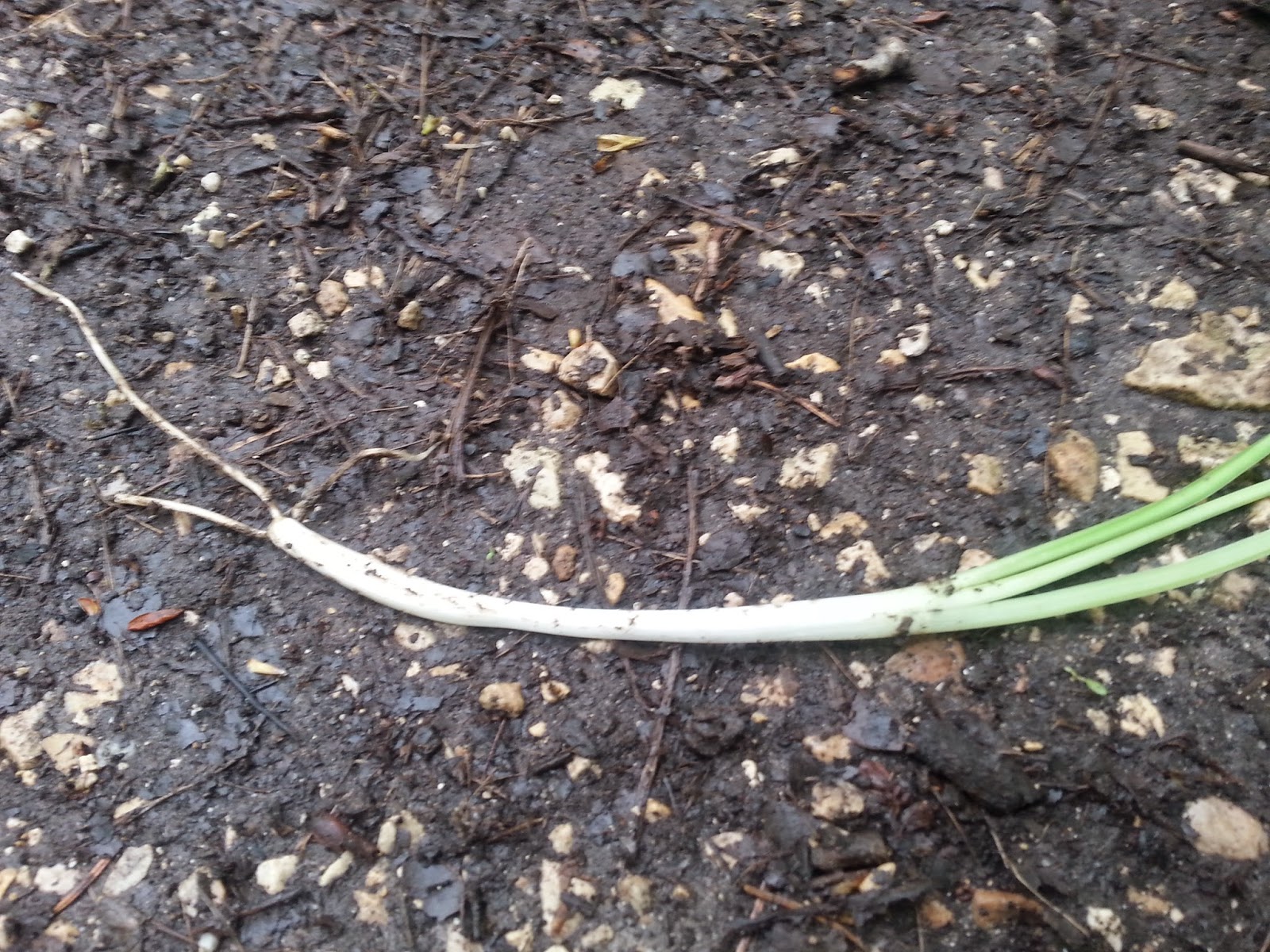
명이나물의 원뿌리 관찰


산나물은속씨 식물에서 외떡잎식물강으로 분류된다.
 

산나물은 산지대의 나무숲, 그늘진숲속, 풀밭, 산허리에서 자라는 풀이다. 원산지는 아시아다.
 

후각:전초에서는 강한 마늘 냄새가 난다.

촉각: 잎의 윗부분은 표피에 의해 부드럽다. 하지만 반대편은 조금 거칠다.

시각: 진한 초록색을 띠며, 뿌리에 가까워질수록 색이 연해진다.

미각: 강한 마늘향이 공존한다.

 
산마늘은 자양강장, 피로회복, 소화, 통증 완화, 구충, 해독


*전초: 꽃, 잎, 줄기, 뿌리 따위를 모두 갖춘 풀의 온전한 포기


Sunday, 18 January 2015

#26 Osmose (Français)


Osmose

Qu'est-ce que l'osmose?
L'osmose est le mouvement de molécules d'eau d'une région de concentration élevée (solution diluée) à une zone de faible concentration (solution concentrée) à travers une membrane semi-perméable.

Quand et pourquoi l'osmose se produit-elle?
L’osmose se produit lorsque l'eau autour d’une cellule est plus concentrée que l'eau à l'intérieur du cytoplasme de la cellule. Dans ce cas, le cytoplasme va se pousser contre la paroi de la cellule en raison des nombreuses molécules d'eau qui entrent dans la cellule. Elle peut également se produire dans le sens opposé, lorsque l'eau à l'intérieur de la cellule est plus concentrée que l'eau autour de la cellule. Lorsque cela se produit, le cytoplasme va alors s’éloigner de la paroi cellulaire, comme il a diminué en raison des molécules d'eau quittant la cellule. Cela se produit car les molécules d'eau vont se déplacer d'une zone de haute concentration vers une zone de faible concentration.

Exemple d’une expérience d’osmose :
Un exemple clair pour montrer comment marche l’osmose, serait une expérience de pommes de terre. Dans cette expérience, nous utilisons trois morceaux de pommes de terre, coupés en fines tranches qui ont la même masse, et qui seront chacun placé dans différentes solutions de concentration de sucre. Pour savoir où l'osmose se produit, nous avons pesé la masse de chaque tranche de la pomme de terre avant de commencer l'expérience, et nous allons peser nos tranches de pommes de terre après l'expérience à nouveau pour vérifier  s'il y avait une différence de masse et donc si l'osmose s’est produite. Le premier morceau de pomme de terre est placé dans une concentration de sucre de 0 molaire, la seconde à une concentration de 0,5 molaires et la troisième à une concentration de 2 molaires. La théorie de cette expérience était que le morceau de pomme de terre où la concentration de sucre est de 0 molaire serait celle où se produirait l'osmose. Le morceau de pomme de terre où la concentration est de 2 molaires serait celle où les molécules d'eau sortiraient des cellules de pommes de terre pour aller dans la solution. Nous avons également pensé que le morceau de pomme de terre avec 0,5 molaires ne changerait pas de masse parce qu'il y aurait équilibre.
 

Notre hypothèse est que dans l'eau pure, la masse de la pomme de terre augmente et quand la concentration est plus élevée, la masse diminue.
Nous avons commencé par
peser nos trois morceaux de pomme de terre et ensuite
enregistré leur masse. Après cela, on a placé chaque morceau de pomme de terre dans les trois solutions de sucre et on les a laissés dans la solution pendant 25 minutes. Après avoir attendu 25 minutes, nous avons sortis les morceaux de pommes de terre de la solution et  nous avons de nouveau pesé chaque morceau de pomme de terre et nous avons enregistré leurs masses.


Nos résultats étaient comme prévu:

La concentration de sucre (molaire)
Temps (minutes)
La masse avant l’expérience (grammes)
La masse après l’expérience (gramme
s)
La différence de masse
0
25
3,19
3,47
+0,28
0,5
25
3,04
2,96
-0,08
2
25
3,05
2,62
-0,43


Nous avons donc conclu notre expérience en disant que lorsque le morceau de pomme de terre est dans une solution de sucre élevé, il perdra une partie de sa masse et quand un diffèrent morceau de pomme de terre est dans une concentration de sucre faible, sa masse augementra. Cette augmentation et diminution de la masse est donc ce qui prouve que l'osmose se passe dans les cellules.

#25 Osmosis (English)


Osmosis

What is osmosis?
Osmosis is the net movement of water molecules from an area of high water concentration (dilute solution) to an area of low water concentration (concentrated solution) through a partially permeable membrane.

When/Why does osmosis occur?
Osmosis happens when the water surrounding a cell is more concentrated than the water inside of the cell’s cytoplasm. In this case the cytoplasm will push against the cell wall due to the numerous water molecules coming into the cell. It can also happen vice versa, when the water inside of the cell is more concentrated than the water surrounding the cell. When this happens the cytoplasm will then push away from the cell wall as it has shrunk due to the water molecules leaving the cell. This happens due to the water molecules moving from an area of high concentration to an area of low concentration.
Osmosis Lab example:
A clear example to show the way osmosis works would be the ‘Osmosis in Potato cells’ experiment. In this experiment we use 3 pieces of potato, cut into strands which are about the same mass, which will each be placed into different sugar concentration solutions. To find out where osmosis occurred we weighed the mass of each strand of potato before starting the experiment and we would weigh our strands of potatoes after the experiment again to see if there was a difference in mass and therefore if osmosis had occurred. The first piece of potato will be placed in a sugar concentration of 0 molar, the second in a concentration of 0.5 molars and the third in a concentration of 2 molars. The theory to this experiment was that the piece of potato in the 0 molar sugar concentration would be the one where the water molecules will go inside the potato cells and the piece of potato in the 2 molars sugar concentration would be the one where the water molecules would leave the potato cells to go into the solution. We also thought that the piece of potato which would go in the 0.5 molar solution would stay more or less the same because there would be an equilibrium.

Our hypothesis was that in pure water, the mass of the potato would increase and that in high solute concentration, the mass will decrease.

We started out by taking our three pieces of potato and weighing each one and we then recorded their mass. After this, we placed each piece of potato into the three solutions of sugar and left them in the solution for 25 minutes. After waiting 25 minutes we took the pieces of potato out of the solution and again weigh each piece of potato again and record their mass.
 

Our results were as expected in our otheory: 

Sugar concentration (molar)
Time (minutes)
Mass before experiment (grams)
Mass after experiment (grams)
Mass increase and decrease (grams)
0
25
3.19
3.47
+ 0.28
0.5
25
3.04
2.96
- 0.08
2
25
3.05
2.62
- 0.43


We therefore concluded our experiment by saying that when the piece of potato is in a high sugar solution, it will lose some of its mass and when it is in a low sugar concentration, it will gain mass. This increase and decrease of mass is therefore what proves osmosis happening in cells.