Thursday, 10 December 2015

#68 Почему мы потеем? (Why do we sweat?) (Russian)

Почему мы потеем?


Потливость - проблема каждого человека, но далеко не каждый знает почему мы потеем. А вам никогда не хотелось узнать почему это происходит с нами каждый день и как это можно предотвратить различными способами?

Что такое при и как он образуется?
Пот – это жидкость сложного состава. На 98-99% он состоит из воды, но кроме того содержит азотистые вещества. Пот выделяют специальные железы, расположенные на коже. Их делят на эккриновые и апокриновые.

Работу потовых желез регулирует нервная система. Терморецепторы кожи, внутренних органов и мышц реагируют на жару, съеденный горячий суп, перегрев организма при тяжелой физической работе или при лихорадке. Сигнал, полученный от этих рецепторов, проходит непростыми нервными путями через мозг и достигает, наконец, нервных волокон, которые стимулируют секрецию пота в железах. Вся эта деятельность происходит без сознательного участия человека; он не может силой мысли заставить пот литься ручьем или высохнуть. 
 

Откуда берётся неприятный запах?
Сам по себе пот апокриновых желез не имеет запаха, но он содержит относительно много липидов. Жирная и вязкая жидкость служит питательной средой для бактерий, чаще всего стафилококков. Они разлагают органические вещества пота, а также отмирающие клетки на поверхности кожи вблизи потовых желез. В результате деятельности бактерий образуются ненасыщенные жирные кислоты и соединения аммиака, которые неприятно пахнут. А если человек налегает на специи, лук и чеснок, его пот будет пахнуть еще резче. Неприятный запах могут вызвать и некоторые лекарства, например, препараты, которые содержат серу.

Зачем же нам потеть?
 потения несколько функций, но самая главная – терморегуляция. Выделенный железами пот испаряется и охлаждает тело.
 потовых желез есть и другое назначение – они выводят из организма токсины и продукты обмена. С потом человек избавляется от ртути, мышьяка, железа, ядов и некоторых лекарств. На этом, в частности, основан лечебный эффект парной и бани. 

Как уменьшить потливость и избавится от столь неприятного запаха?
1.    Самый очевидный и распространённый способ это использование дезодорантов. Однако это может быть не всегда настолько эффективно на сколько бы нам хотелось. В этом случае стоит соблюдать некоторые правила которые непременно помогут вам:

   Диета - не стоит употреблять продукты содержащие кофеин и теобромин, так как эти вещества стимулируют потоотделения.

   Соблюдение гигиенических правил - желательно принимать душ два раза в день и избегать синтетической одежды.

2.    Электрофорез - сеансы должны проводиться раз в неделю и хороший эффект будет заметен чек 8-9 сеансов.

3.    Использование инъекций ботулотоксина А - даёт отличный эффект, но необходимо делать повторные инъекции раз в 6-8 месяцев.

4.    Если у вас чересчур обильная потливость, то вы можете рассмотреть вариант операции что бы решить вашу проблему. Например, различные виды кюретажа подмышечной впадины. Это выскабливание кожи изнутри через небольшой разрез. Показан кюретаж при изолированном подмышечном гипергидрозе. У большинства пациентов происходит прекращение или значительное снижение потоотделения. Со временем (после 6 месяцев) потливость может восстановиться.
 
KAA

#67 Болезнь Альцгеймера (Alzheimer's disease) (Russian)

Болезнь Альцгеймера
Что это такое?
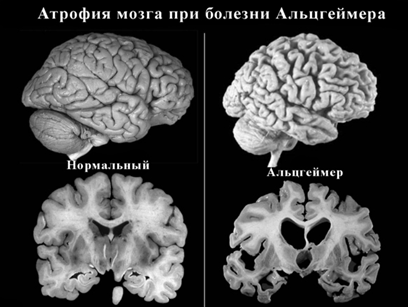
Болезнь Альцгеймера — нередко в разговоре ее не совсем верно называют старческим маразмом, — это болезнь, при которой определенные системы клеток мозга (нейронов) как бы отмирают, что приводит к развитию старческого, или сенильного слабоумия (деменции). 

Болезнь Альцгеймера является наиболее частой причиной слабоумия, развивающегося в пожилом и старческом возрасте. Первые симптомы могут появиться уже после 40 лет, а после 70-летнего возраста частота заболевания доходит до 30%. 

Это заболевание чаще наблюдается у людей малообразованных, с неквалифицированными профессиями. У человека с высоким интеллектом меньше шансов столкнуться с проявлениями болезни Альцгеймера по той причине, что у него существует большее количество связей между нервными клетками. А значит при гибели одних клеток утраченные функции могут передаваться другим, которые ранее не были задействованы. Чаще возрастное слабоумие поражает женщин — возможно, причина этого кроется в большей продолжительности жизни женщин: многие мужчины просто не доживают до болезни Альцгеймера. 

От чего это бывает?
При болезни Альцгеймера в головном мозге происходит отложение белка в виде «сенильных бляшек» и образование так называемых нейрофибриллярных клубочков, состоящих из поврежденных нейронов, — оба этих процесса ведут к разрушению нервных путей мозга.
 
Пока до сих пор не выяснено, что же конкретно вызывает эти изменения, однако в последние годы ученым удалось выделить специальные гены, ответственные за предрасположенность человека к болезни Альцгеймера. 

Что происходит?
Болезнь начинается с нарастающих нарушений памяти. Ранняя стадия может остаться незамеченной для окружающих, поскольку человек, отметив у себя первые симптомы заболевания, всячески пытается скрыть их. С нарастающей потерей воспоминаний появляется чувство растерянности, непонимания, недоумения. Постепенно человек перестает ориентироваться в месте и времени, из его памяти выпадают накопленные знания, опыт, навыки, причем забываются сначала ближайшие по времени события, а потом более отдаленные. Нарушается узнавание формы, цвета, лиц, чувство ориентации в пространстве. Это может сказываться, например, в беспорядочности и асимметрии почерка: буквы скапливаются в центре или в углах страницы, по вертикали. Речь становится все более непонятной. 

Когда заболевание начинает прогрессировать, нужно использовать любую возможность, чтобы поддержать способность больного к самообслуживанию, уменьшить его изоляцию от окружающих, постараться предупредить развитие депрессии. Например, могут помочь новые, лучше подобранные очки, более совершенный слуховой аппарат, простой в обращении радиоприемник, книги с картинками и крупными буквами. 

Лечение
Специальных препаратов, излечивающих болезнь Альцгеймера, пока не существует. Однако есть лекарства, которые облегчают проявления болезни и существенно сдерживают ее развитие.
 
KAA

Tuesday, 24 November 2015

#66 Albinism (English)

Albinism


Otherwise known as achromia, achromasia, or achromatosis, albinism is a genetic condition characterized by a deficit in the production in melanin resulting in the partial or complete absence of pigment in the skin, hair and eyes. This hereditary disease can be found in humans, mammals, birds, fish, reptiles and amphibians. Despite the fact that albinism is a hereditary condition, in most cases, there's no family history of it. People with albinism often have vision problems and are vulnerable to sunburns and skin cancers if they do not protect themselves well enough. According to The National Organization for Albinism and Hypopigmentation, one in every 17,000 people in the United States has some type of albinism.

Oculocutaneous albinism is used to refer to people with little or no pigmentation in their eyes, skin and hair. Little or no pigmentation in the eyes alone is known as ocular albinism. An individual with complete absence of melanin is called an albino. One with only a small amount of melanin is described as albinoid. People with albinism are very pale with fair hair and very light eyes. In some cases, the eyes appear red or purple as the iris actually has so little color that  blood vessels inside of the eye show through. Hence why the main test for albinism is an eye test.

A person with albinism is generally as healthy as the rest of the population. However, problems with vision and skin are particularly common. Vision problems result from abnormal development of the retina and patterns of nerve connections between the eye and the brain. The lack of pigment in the eyes results in problems with eyesight leading to discomfort in bright light. Concerning the skin, the lack of melanin, which helps protect the skin from UV radiation, means that their skin can burn more easily. Precautions, such as applying lots pf suncream and staying covered, need to be take to avoid damage to the skin caused by the sun.

Albinism is caused when a person inherits one or more defective genes that cause them to be unable to produce the normal amounts of a melanin. Melanin is a dark brown to black pigment occurring in the hair, skin, and iris of the eye in people and animals. It is responsible for the tanning of skin when exposed to sunlight.

Researchers have identified several genes that result in albinism. The genes are located on "autosomal" chromosomes - chromosomes that contain genes for general body characteristics. Genes carry the information that makes you an individual. Albinism is a "recessive trait" - a person without albinism can carry the albinism trait. Both parents must carry a defective gene to have a child with albinism. When neither parent has albinism but both carry the defective gene, there is a 25% chance that the baby will be born with albinism.

Individuals with this condition are often outcasted and misunderstood by society. They can be the center of ridicule, fear and even violence.
 
McA

Sunday, 22 November 2015

#65 Cloning (English)

Cloning

To clone is to make an identical copy of. Now, cloning isn't as futuristic as people often believe it to be. When people think of cloning they often picture someone entering a machine and exiting with a twin by their side. This however is not the case.
 
In biology, a clone is a group of genetically identical organisms or a group of genetically identical cells derived from a single parent cell. The first mammal to be cloned from an adult somatic cell using the process of nuclear transfer was Dolly the sheep. Nuclear transfer is a two-part process where scientists first remove the nucleus from an egg which they then replace with the nucleus of an older donor cell. A new clone is formed when the egg starts to divide. Dolly was cloned by taking udder cells from a donor sheep. These cells were cultured in a low nutrient medium to make the genes switch off and become dormant. An unfertilized egg was taken from another sheep and its nucleus was removed by using a micropipette. The egg cells were fused with the udder cells using a pulse of electricity. The fused cells developed like normal zygotes and became embryos. These embryos were then implanted into another sheep who’s role was to be the surrogate mother. One lamb was born successfully and called Dolly. Dolly was genetically identical to the sheep from which the udder cells were taken.
 
Human cells can also be cloned however several ethical issues are raised when it comes to it. For example, embryonic stem cells can be used for therapies that save lives and reduce pain for patients. Cells can also be taken from embryos that have stopped developing meaning they would have died anyway and they are taken at a stage when the embryos have no nerve cells and therefore can not feel pain. Nonetheless, every human embryo is a potential human being and should be given the chance of developing. Not to mention there is an abundance of embryos produced and so many are killed. Finally there is a risk of embryonic stem cells developing into tumor cells.
 
In my opinion cloning is useful to a certain extent. However when it reaches a point where scientists get to decide the outcome of a certain organism then something needs to be done. Otherwise all sense of individuality will be gone and nothing will be down to chance. We will live in a society where everything is planned and imperfection ceases to exist. Not only this but cloning can still go wrong and lead to further complications. For example, cloned animals that survive tend to be much larger at birth resulting in breathing problems. On the other hand some argue that scientists and doctors should not "play God," however aren't we technically already playing God by curing disease and implanting embryos? In saying this, how is cloning any different?

To conclude the concept of cloning is still relatively new and futuristic as well as controversial. Several ethical issues come in to play when the subject is brought up, however it definitely has its strengths and weaknesses.
 
McA


Saturday, 21 November 2015

#64 Sharks can't get cancer? (English)


Sharks can't get cancer?

Although it is not true that sharks do not develop cancer, they do have a remarkable cancer shield. Tumors are uncontrolled cellular growth and to support their very high metabolism, they secrete a hormone called 'angiogenin.' This causes nearby blood vessels to grow new branches that surround the tumor, bringing in nutrients and carrying away waste products. A part of the tumor then breaks away and establishes another cancerous colony elsewhere in the body. Research has revealed a promising anti-tumor agent obtainable from shark cartilage. Shark cartilage contains a compound opposed to the effects of angiogenin, called 'angiogenin inhibitor.' This prevents the formation of new blood vessels so that the proto-tumor 'chokes' in its own waste products.

Sharks seem to possess only one class of broad-spectrum serum antibody - similar to that found in human infants. An antibody is a blood protein produced in response to a specific antigen. In humans, this broad-spectrum class of antibody is replaced by more specific antibodies as the child matures and is exposed to a greater variety of pathogens. Sharks however keep their non-specific immune response throughout their lives. This generalized immune system is one of the reasons sharks are able to detoxify many potentially harmful compounds quickly without need of previous exposure. It has even been suggested that sharks may be helpful in our fight against HIV and AIDS. This was originally disregarded as no one could see why a shark would develop a response to something it is very unlikely to encounter. 

Finally, Sharks have all the internal organs one would expect of a gill-breathing vertebrate as well as something 'extra' called an 'epigonal organ'. This lies underneath each of the kidneys and is quite unique to elasmobranchs (cartilaginous fish.) The epigonal organ seems to be composed of lymphoidal tissue and seems to be concerned with hemopoetic functions. Recent data also indicates that the organ is the site of T-cell differentiation in elasmobranchs, playing an important role in the immune system of these fishes. Without long bones to serve as a site for leucocyte development, sharks have jury-rigged a scrap of available tissue to bear that function.

McA

Thursday, 19 November 2015

#63 Sexually transmitted diseases (English)

Sexually transmitted diseases

Sexually transmitted diseases (STDs) are diseases transmitted through sexual activities. They are transferred through the exchange of bodily fluids or by direct contact with the infected area. They can however be prevented from the use of protection during intercourse. Condoms, for example, are highly effective when it comes to preventing disease. Herpes, gonorrhea and chlamydia are all types of STDs.  

Herpes is identified by painful blisters of the mouth or genitals. It is caused by two types of herpes simplex virus (HSV.) HSV enters the body through a mucous membrane or a small opening in the skin. Although the virus is most contagious through direct contact with herpes sores, it can also be transmitted through saliva. After the primary infection, the herpes virus travels along the nerves and becomes dormant within nerve cells. It is reactivated during times of stress where it travels back out through the same pathway, causing recurring blisters. Antiviral drugs can help people with herpes to stay outbreak-free for longer.

Gonorrhea is caused by Neisseria gonorrhoeae, a bacterium that can grow and multiply easily in mucus membranes of the body in the warm, moist areas of the reproductive tract. In women symptoms include whitish discharge from the vagina, pelvic pain, burning when urinating, bleeding between periods and several others. Men also experience a whitish discharge from the penis, a burning sensation when urinating and painful or swollen testicles. Symptoms for men usually appear two weeks after infection. However with women some symptoms are so mild that they go unnoticed. Gonorrhea can be treated with antibiotics and other medication. 

Chlamydia is easily spread and often goes unnoticed. Abnormal vaginal discharge that may have an odor, bleeding between periods and pain when having sex are all symptoms of chlamydia in women. In men painful urination, burning and itching around the opening of the penis and swelling around the testicles are all common signs. Once again this disease can be treated through the use of oral antibiotics.

Sexually transmitted diseases however can be prevented through the practice of safe sex or just refraining from any sort of sexual intercourse. Another way to keep safe is not sharing towels or underclothing as well as getting a vaccination for hepatitis B.
 
McA

Thursday, 12 November 2015

#62 Why do we shiver? (English)

Why do we shiver?

Its well-known that we shiver when we are cold but why do we shiver? Is there a specific and biological reason why we shiver?

The answer is yes! The human body needs to be at a constant temperature of 37 degrees Celsius in order for us to work properly. Your brain has a gland called the hypothalamus gland which helps control your body temperature. In order to prevent things such as hypothermia and other diseases, your brain must be very careful with your body temperature. Your skin contains receptor cells which send messages to your brain telling your brain if your body temperature to go up or down and uses different tacts to do this.

Shivering is a tactic your brain uses in order to keep your body temperature at 37 degrees Celsius. In order to shiver, your muscles contract and relax very quickly repeated times. Twitching enables your muscles to produce heat which will in turn make your body temperature warmer. Your brain sends signals and some of these signals may also go to your jaw which is why, sometimes, your teeth start to chatter as your whole body are getting signals and some may get sent to your jaw. When your muscles produce heat, your muscles release the hormone Irisn which helps to heat your core temperature back to 37 degrees Celsius.

Some may argue that shivering is the opposite as sweating, which in fact, it is! Instead of helping you cool down like sweating does, shivering helps you warm up meaning that it helps your core temperature heat up.

This is why, next time you feel shivers down your spine, it may mean that you should grab another sweater and sit by a fire!

Resources:
http://www.livescience.com/32475-why-do-we-shiver-when-cold.html
http://blog.zocdoc.com/shiver-cold-weird-science-daily-life/

PRM