Saturday, 17 October 2015

#41 Redheads (English)


Redheads 


You have probably seen a red head in your lifetime, if not then go to Ireland or Scotland.

There is of course scientific reasoning as to why redheads are well redheaded, but you may not know what they can do. 
 
Red heads actually get their hair colour the same way we all get our hair colour, Melanin.

We all have melanin it is associated with the Melanocortin 1 receptor (the simpler way of saying it is the MC1R gene.) Redheads actually have a mutated version of it. This gene is used for making protein receptors found on the melanocytes, they produce melanin, which makes our skin, and eyes be different colours.

This gene is recessive, which means that if two parents have the recessive gene they are able to have a ginger child even if they do not have ginger hair. So they are not going extinct to much debate. Sorry…

Red heads are very common in the UK, which is accustomed to the lack of sunlight. With the lack of sunlight there, their pale complexion absorbs Vitamin D much easier than people who have darker skin.

Redheads actually need 20% higher dose of anaesthetic compared to a non-red head. But they are more sensitive to thermal changes and pain. There are still queries as to why this is true, but scientists presume that it is because our MC1R gene is linked to endorphins (natural pain killers.)

In conclusion red heads are mutants…

SSP

#40 Whales (English)

 Whales


Whales, where to begin? There is so much people don't know about whales! For example, they belong to the same order as dolphins and porpoises which is cetacea. Whales are also divided into two suborders, baleens, the largest species of whale and toothed whales who sense their environment through echolocation. Echolocation is the location of objects by reflected sound.
As whales are indeed mammals, they breathe air into lungs, are warm-blooded, feed their young milk and have some hair. Their tail fins enable them to propel themselves through the water.
A layer of fat called blubber, which lies beneath the skin of a whale, serves as an energy reserve as well as insulation. Whales breathe through blowholes and while toothed whales only have one, baleens have two, yet another distinction between the two suborders.

Depending on the type of species of whale, diet varies. It can range from microscopic plankton to large marine animals. The population also varies with each species.
The behavior of whales is very interesting. They tend to migrate long distances each year going from their cold water-feeding grounds to warmer areas. They either travel alone, in groups or in pods (small herds.) Most whales are extremely active, they breach out of the water and thrust their tails against the water's surface which is believed to be a warning of danger nearby. They also communicate using lyrical sounds which can be heard for miles.

Unlike many animals, whales are conscious breathers which means they decide when to breathe. This of course means that when they sleep they cannot afford to fall into an unconscious state for too long.
The mating season of whales varies depending on the species, along with the gestation period which can range from 9-15 months! The number of offspring is only one calf, however this strategy ensures a high probability of survival in the wild.
Climate change is a serious threat to whales with rising sea levels and changes in the temperature of the sea. This leaves whales in a vulnerable situation as they may not be able to adapt quickly enough to survive.

McA

#39 Les neurosciences (Français)

Les neurosciences


En France, 30% du budget de la santé publique sert aux malades atteintes de troubles neurologiques et psychiatriques. Par conséquent, il y a eu des développements conséquents dans le domaine du cerveau depuis plusieurs années en ce qui concerne l'organisation anatomique du cerveau et son interaction avec le monde extérieur. Les neurosciences sont appliquées avec succès dans le champs médical. De plus, ils ont maximisé la lutte contre le terrorisme.

Premièrement, le progrès actuel de l'étude du cerveau permet l'invention de nombreux médicaments pour la schizophrénie, les dépressions et les maladies neurodégénératives. En effet, la collaboration avec le domaine génétique et neurologique a provoqué l'allègement de la gravité de ces maladies. Il y avait une découverte des gènes embryonnaires qui contrôlent l'organisation et le développement du système nerveux. Ensuite, il y a une grande révolution pour l'examen du cerveau intérieur qui est l'IRM (Imagerie par résonance magnétique). Cette invention a réalisé l'imagerie du cerveau presque réelle. En conséquence, les médecins sont dorénavant capables d'observer le fonctionnement cérébral. C'est-à-dire, ils ont trouvé un bon remède pour le traitement. Par exemple, la stimulation crânienne modifie les intentions motrices ou les perceptions.

Deuxièmement, la collaboration avec des spécialistes des sciences du mouvement humain et des neurosciences comportementales a dirigé à un examen du comportement individuel qui dérive de la norme. Bien que les surveillances soient une violation aux libertés individuelles, elles amènent une diminution de la criminalité. En plus, la nouvelle technologie qui vérifie la véracité des propos des accusés empêche le terrorisme.

En conclusion, le développement de la connaissance neurologique a introduit plusieurs solutions aux problèmes neurologiques. Toutefois, il existe une mauvaise utilisation des neurosciences dans les autres domaines.

Reference:
Label France
Le Monde diplomatique

KSJ

Friday, 16 October 2015

#38 L'Acide désoxyribonucléique (Français)

L'Acide désoxyribonucléique

 
L'ADN est le code-barre génétique qui possède l'histoire des origines de l'homme. Par conséquent, il est utilisé pour les arrestations des criminelles, la recherche des ancêtres et l'examen médical. Certains mettent à disposition les analyses d'AND et créent ainsi un nouveau marché.

Utilisant l'analyse de l'ADN, les laboratoires sont capables d'identifier les ancêtres et l'origine des hommes. C'est-à-dire, l'histoire de la famille est identifiée par les chromosomes à la place des archives de l'état civil. De plus, cette information est fournie à la police pour son investigation parce que le caractère de l'ADN possède les marqueurs génétiques qui sont transmis dans les générations.

La généalogie par la génétique dorénavant est un produit, disponible dans le monde entier. Les amateurs sont intéressés par leurs racines. Aujourd'hui, les clients sont capables d'accéder aisément à leur profil génétique à un prix raisonnable. Comme cet enregistrement devient plus répandu et accessible, les client se heurtent à des évènements imprévus. Par exemple, Untel trouve qu'il avait du sang indien, donc désormais, il voudra bénéficier des avantages d'être Indien. Quoiqu'en apparence, il n'ait rien d'Indien, il a le même privilège que les Indiens.

En conclusion, bien que l'ADN permette aux hommes se caractériser, c'est un sujet qui est délicat à cause des rapports étroits avec l'identité et l'hérédité. Le développement de la technologie qui permet facilement l'accessibilité à l'information génétique peut troubler l'ordre public.

KSJ

#37 Goosebumps (English)

Goosebumps


What are goosebumps?

Goose pimples or goosebumps are the bumps on a person's skin at the base of body hairs which may develop when a person is cold or experiences strong emotions such as fear, nostalgia, awe, admiration.The reflex of producing goose bumps is known as arasing, piloerection, or the pilomotor reflex. It occurs in many mammals besides humans; a prominent example is porcupines, which raise their quills when threatened.

These stimulants cause a nerve discharge from the sympathetic nervous system and the nerve discharges create muscle contractions called "arrrectores pilorum" that raise the hair follicles in our skin. It is the elevation of the hair that causes the Goosebumps.

-    "The name Goosebumps actually comes from the fact that plucked goose feathers resemble the human hair follicles.".

We cannot control Goosebumps at all and they are also considered a fight or flight response. A fight or flight response is just a physiologic response that is our bodies natural and automatic response from any harm or fight off something, like an enemy or the cold. This leads right into some of the theories for why we get Goosebumps because the reason we get them is still uncertain. Biologists believe that they are a reflex that we developed years and years ago. One theory about Goosebumps suggests that our ancestors, who were much hairy than we are today, appeared bigger and scarier when they had goose bump

Why do we get goose bumps?

The body hair of all mammals automatically stands up when cold, creating a fluffy layer of warmth leading to a homeostatic effect called vasoconstriction we’re cold, the muscles around the hair follicles contract – a reflex left over from when our ancestors had long body hair. But since we don’t have much body hair, all we see are the goose bumps on our skin.

Vasodilation and vasoconstriction occur in order to control blood pressure and body temperature. Vasoconstriction causes the vessel to reduce its diameter, resulting in raised pressure and increase in body temp caused by friction from the blood passing through the internal walls of the vessel. Vasodilation is the exact opposite - if blood pressure or temperature is high, the vessel will increase its diameter in order to lower pressure within and decrease friction.

5 ways to get goosebumps
1.    Listen to a song you love and sing along.
2.    Have someone you trust tickle your back or your arm.
3.    Watch a movie that moves you
4.    Give your time and attention to someone who needs to be heard.
5.    Stand in the rain

Further Research questions about goosebumps-
Why do goosebumps take a log er time to go away when you focus your eye sight on them?
Do goosebumps spread in a specific way or do they occur simultaneously?
How are goosebumps related to heart rate?

HIB

#36 Why do we sleep? (English)

Why do we sleep?

 
Sleep is one of the three pillars on which a healthy and happy life is based, and we spend about a third of our lives sleeping. When I prepare for my exams, I wish I don’t fall asleep. However, it is hard to prevent myself dozing off to sleep.
 
Why do we sleep? Scientists cannot clearly justify it. In fact, they say it is the time when our brains and bodies shut down and allow us to recover. As we accept new experiences, our brain cells link with other parts of the brain. When we sleep, these essential connections are reinforced whereas the trivial information is pruned. According to the experiment with sleep-deprived rats, this process occurs while they sleep.

Maiken Nedergaard, professor at the University of Rochester Medical Center, discovered a network of microscopic fluid-filled channels in rats that clears waste chemicals from the brain.  

The research showed that the brain cells shrink during sleep to make paths for the increase of the size of the interstitial space to allow fluid to wash the brain clean. In fact, the lack of sleep prevents the clearing process and some toxic proteins that are left may trigger brain disorders like Alzheimer’s or Parkinson’s disease. This clearly proves the necessity of sleep. 

The parts of the human brain are in the state of ‘asleep’ when they are sleep-deprived. Whales and dolphins, on the other hand, show that they continue to use half of their brain to swim and come up to the surface for air even when they are asleep. The humans become more sleep-deprived; some parts of their brain become inactive, though they are still awake.
Reference:
https://sleepfoundation.org/excessivesleepiness/content/why-do-we-need-sleep
http://www.bbc.com/news/science-environment-32606341

KSJ

Tuesday, 13 October 2015

#35 How does caffeine affect blood pressure? (English)

How does caffeine affect blood pressure?


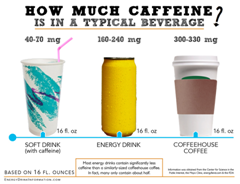
Caffeine is the most commonly used type of drug around the world. However the intake of a moderate amount of caffeine is considered safe and can actually have a numerous amount of benefits but on the other hand with a large amount it causes a lot of serious health issues.

Caffeine is a central nervous system (CNS) stimulant of psychoactive drugs. It is the world's most widely consumed psychoactive drug, but unlike many other psychoactive substances, it is legal and unregulated in nearly all parts of the world. It is believed that 3 out of 4 caffeine users are addicted to the substance.
 
Where can caffeine be found?
-most commonly in coffee beans
-cocoa beans
-guarana seed ( Guarana is used in the making of the Brazilian drink named Guarana)
-the bud of tea leaves

 
 What is caffeines used for ?
Caffeine is used as a food addictive and as a drug and can be prescribed or given out to treat harmless diseases such as tiredness, laziness and drowsiness.However, caffeine is also considered to be an addictive stimulant. In humans, caffeine stimulates the central nervous system, heart rate, and respiration. Caffeine is no longer only added to coffee, tea, chocolate but also to desserts in order to entice people's enjoyment for the product therefore caffeine is being added to waffles, marshmallows, syrup and other snacks.

 
 For healthy adults, the FDA ( food and rug administration)  ha suggested about 3 or 4cups of coffee a day - as an amount not associated with dangerous or negative side effects.

 
"The FDA has not set an amount for children, but the American Academy of Pediatrics discourages the consumption of caffeine and other stimulants by children and adolescents." However a numerous amount of parents do not obey these rules as from a young age, children are fed chocolate and other caffeinated substances.

 
 Effect of caffeine on the body-
 Whether caffeine is taken in as a drink or for medicine, it affects your brain and body and changes the way you think and react to things. Caffeine is a central nervous system stimulant. The central nervous system  is made up of the brain, spinal cord, and the other nerves in the body. Caffeine's main effect on the body is an increased sense of alertness and makes the user seem a lot more awake and energetic however it can also cause other issues as: increased heart rate, dizziness, dehydration and uneven heart rhythm, headaches and can prohibit you from sleeping.

 
 How does it work and how does it affect your blood pressure?
 Caffeine can cause a short, but dramatic increase in your blood pressure, even if you don't have high blood pressure. It's not known yet  what causes this spike in blood pressure. The two thoughts that researchers have are that : "Some researchers believe that caffeine could block a hormone that helps keep your arteries widened. Others think that caffeine causes your adrenal glands to release more adrenaline, which causes your blood pressure to increase."
- It is proven that caffeine has a higher effect on men over 70 and people that are overweight.
The main problem with caffeine is that it can lead to a caffeine overdose leading to nausea, heart palpitations, sweating, vomiting which could in turn lead to a cardiac arrest. Caffeine is consumed so widely that a lot of people have different opinions on the effect of it therefore it is not a 100% clear the true effect of this drug however it is wondered how a drug can be used in everyones morning routine/daily routine. 
 
HIB